A factory built around one question: what happens when the grid blinks?
AI racks doubled in power density faster than grid infrastructure could follow. We started VoltBridge to put bridge power where the load actually lives — inside the rack, next to the silicon.
The gap between watts and wires.
Training clusters now change power demand faster than utilities can ramp. American interconnection queues held over 2,060 GW of generation and storage at the end of 2025 — power availability, as NVIDIA puts it, is now a top deployment bottleneck. Backup that only starts at the room level wastes the one thing AI operators need: local, instant ride-through.
- Rack-level and node-level bridging, not room-scale UPS
- LFP chemistry chosen for cycle life and thermal stability
- Every product specced against AI-rack realities first
One line, start to ship.
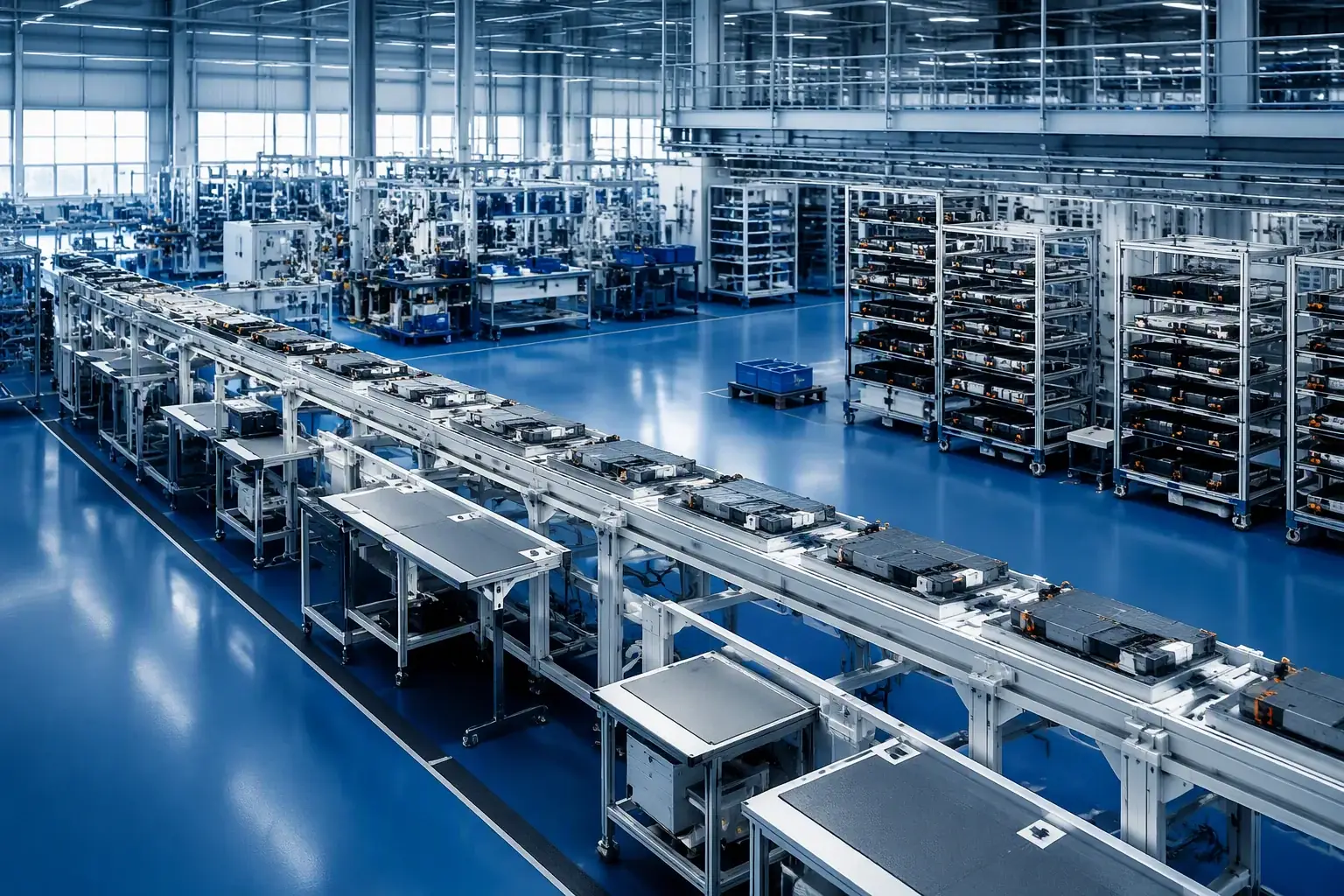
Our Shenzhen facility pairs electronics and electromechanics under one roof, so a BBU never leaves our control between bare board and packed crate.
Short history, sharp focus.
PACK line commissioned
BMS SMT, laser welding and formation/aging racks come online; in-house UN 38.3 pre-compliance bench follows within the year.
51.2V LFP platform matures
The 16S rack platform and 21700 cell selection are frozen; VB-5125 begins sampling with AI datacenter customers.
The GB300 year
VB-E3 in-server module and VB-H400 ±400VDC shelf join the portfolio as GB300 deployments scale and NVIDIA's 800 VDC architecture sets the next bus standard.
Build your backup program with us.
Bring a rack spec or a blank sheet — both end in a datasheet.