RESEARCH · CAMPUS GRID REALITY
A semester of simulation shouldn't die with a campus breaker.
University clusters contend with aging building switchgear, summer peaks and construction crews — while researchers queue for every GPU-hour. With US interconnection queues holding over 2,060 GW at the end of 2025, on-campus compute is growing faster than campus grids. Rack-level BBU bridging turns grid events into non-events.
The research fit
Checkpoint survival, by design.
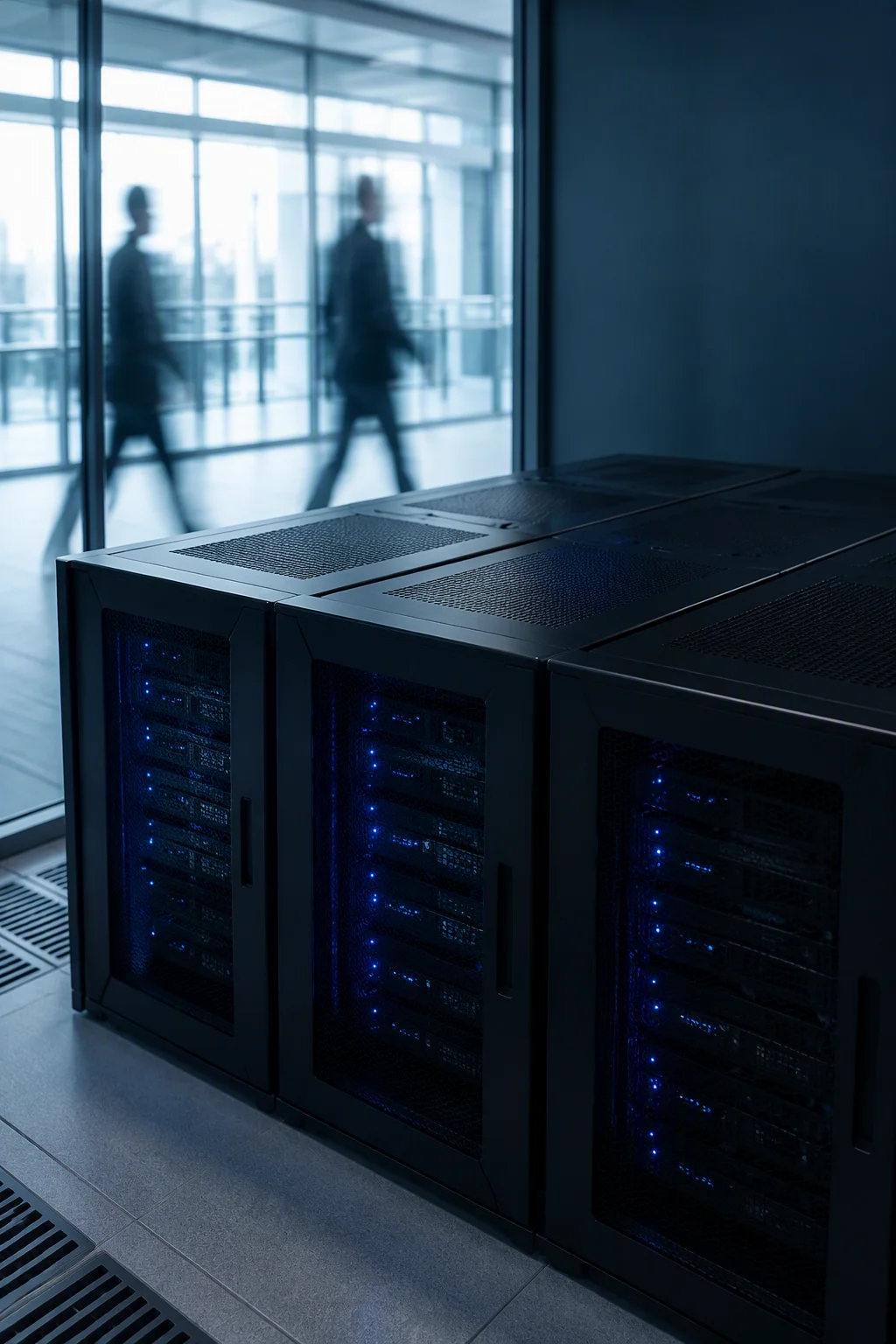
Most research frameworks checkpoint periodically. A bridge window of minutes — not seconds — is what stands between a grid event and a re-run measured in days. VB-5125 shelves are sized to carry a rack through the event and the checkpoint write that follows it.
- Bridge windows from minutes to tens of minutes at partial load
- Quiet, air-cooled operation for machine rooms next to offices
- SNMP into the existing cluster scheduler for clean job pausing
- Grant-friendly procurement: sample units with test documentation
Selection guide
What research IT asks us most.
| Question | Short answer |
|---|---|
| Runtime for one 10kW rack? | One VB-5125 shelf carries ~30 min at reduced load; 3 shelves give full-load headroom |
| Integration with Slurm/schedulers? | SNMP traps feed the scheduler to pause or migrate jobs on battery events |
| Noise & siting? | Passive-air 3U shelves; standard hot/cold aisle placement, no dedicated UPS room |
| Procurement documentation? | UN 38.3 Test Summary, CE DoC and IEC 62619 test reporting supplied per shipment |
| Growth path? | Parallel up to 15 shelves per bus; VB-H400 (±400VDC) for the next-generation clusters |

Protect the queue, not just the hardware.
Research pricing and sample programs available — tell us the cluster size.