The event is over before the UPS would have started.
Bridging is not fast UPS. It is a different contract: detect the excursion in microseconds, transfer to battery in under a millisecond, hold for exactly as long as your migration plan needs, then hand back without a blink. Here is what happens in that first second.
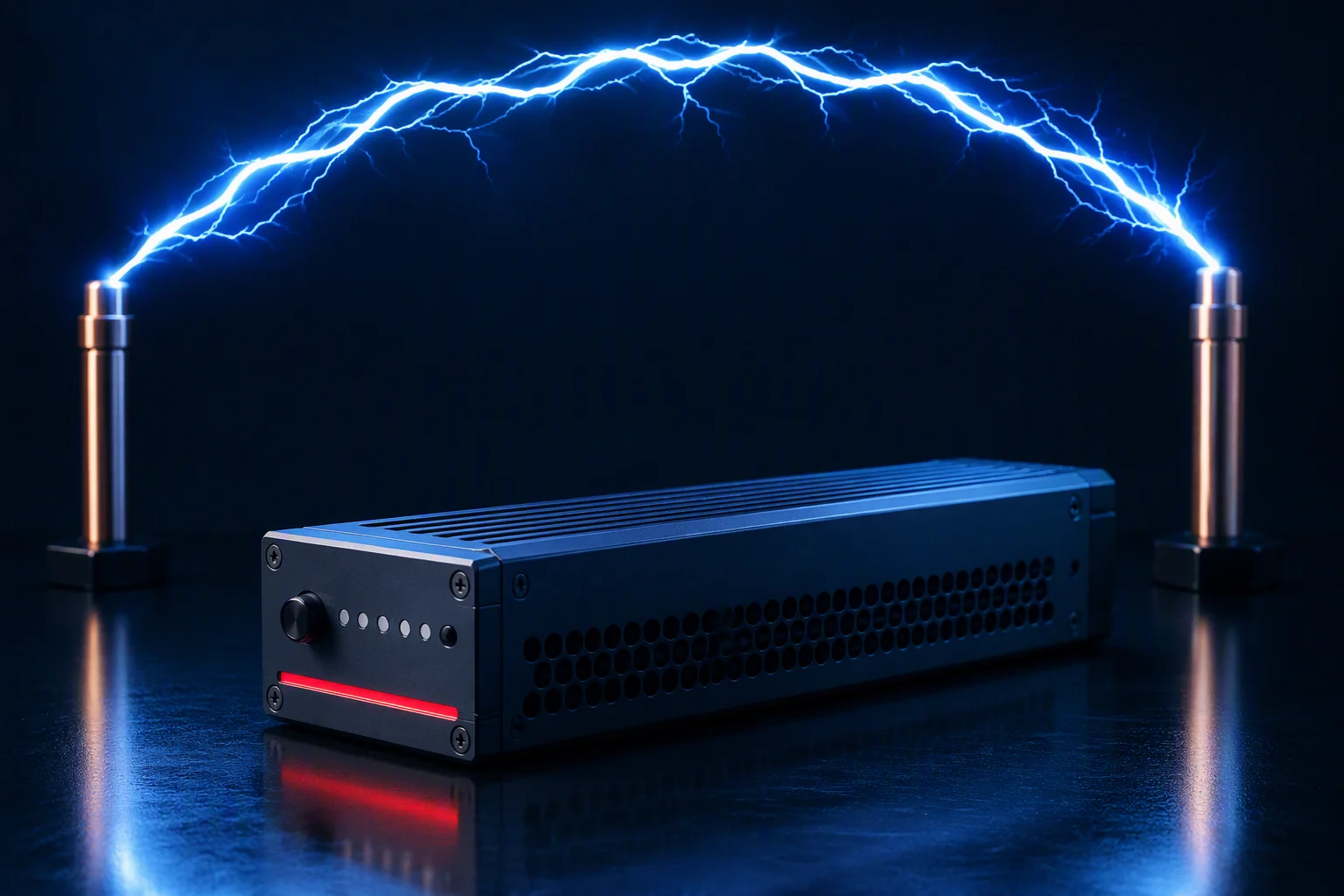
Six hundred microseconds, start to finish.
GB300-class servers tolerate no bus sag: ride-through capacitors assume clean power. Our bridge monitors the DC bus faster than the load can notice it, and takes over while the electrons are still moving.
- Detection: bus deviation flagged in microseconds, ahead of PSU trip thresholds
- Transfer: solid-state path into the battery in <1 ms, inrush-shaped on entry
- Hold: runtimes mapped to migration windows — minutes at full load, tens of minutes partial
- Handback: phase-matched return with automatic recharge, event logged to telemetry
Three decisions that define the bridge.
Sense wide
Bus voltage, di/dt and PSU health monitored independently — no single sensor owns the trip decision.
Transfer solid-state
No relays, no mechanical delay: the battery path is always one gate away from the bus.
Size to migrate
Runtimes are engineering targets tied to your job checkpointing, not marketing tables.
Log everything
Every bridge event is time-stamped to telemetry — power quality audits run on data.
| Product | Transfer | Full-load hold | Designed for |
|---|---|---|---|
| VB-E3 (in-server) | <1 ms | ≥5 min (≥20 min at 1/4 load) | Per-node GPU servers, checkpoint survival |
| VB-5125 (rack shelf) | <1 ms | Minutes at rack load, longer at partial | Rack/cage ride-through, genset bridging |
| VB-H400 (±400V) | <2 ms | Shelf-level, per bay architecture | HV power bays, 800VDC-ready backbone |
Runtime targets quoted per project against your measured load profile.
Name your migration window. We'll hold it.
Bridge validation on samples is part of every program — measured to the millisecond.