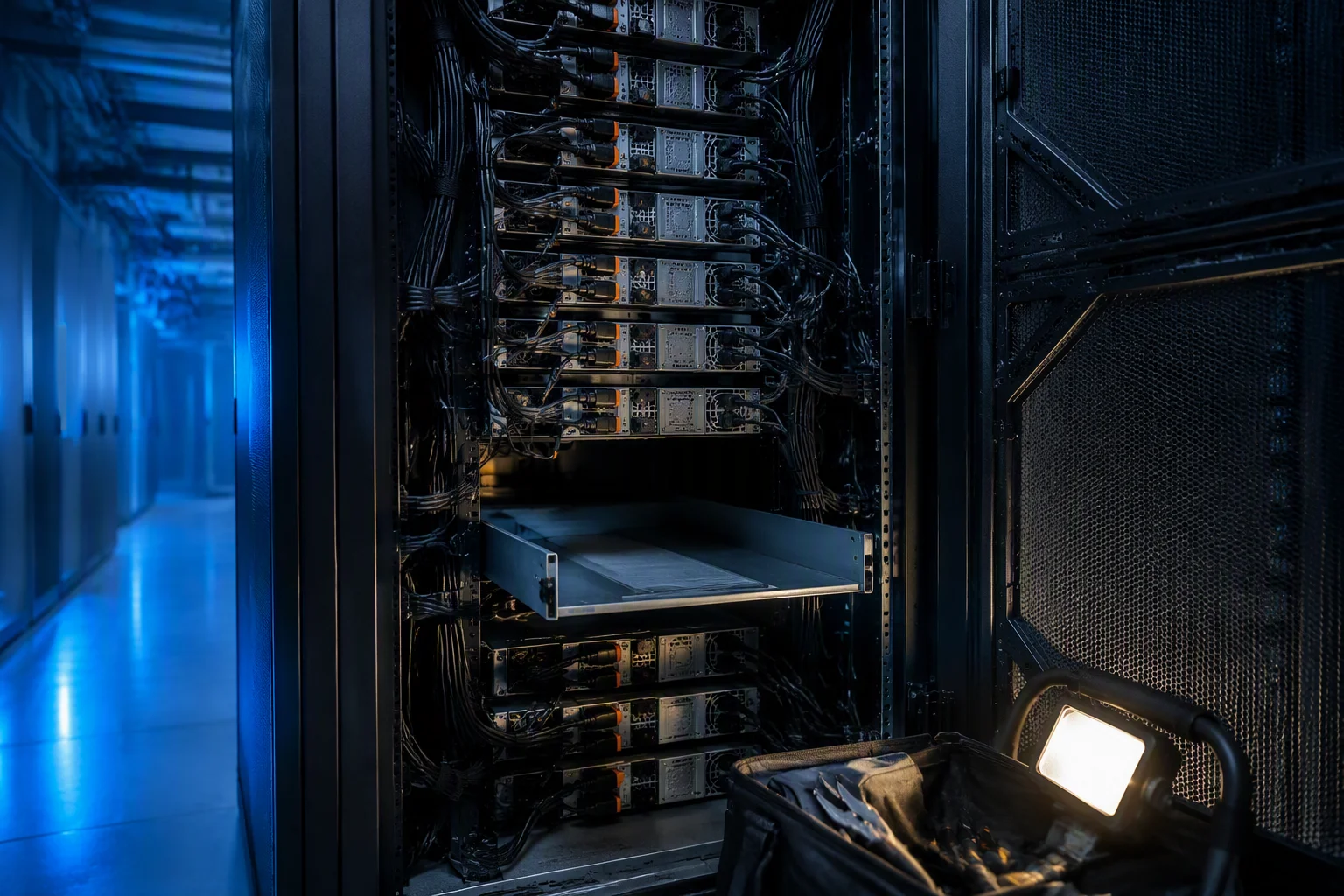
FIG.1 — COMMISSIONING A GB300-CLASS RACK: THE BBU SLOT IS NOW PART OF THE CHECKLIST
Storage moved into the power shelf
NVIDIA's own engineering blog on GB300 NVL72 power describes what changed: the rack's power supply system now integrates energy storage that smooths the training cluster's fast power swings, supports power capping, and — through a GPU burn mode — can even burn off surplus generation. Futurum Group's analysis estimates the smoothing features can cut peak grid demand by up to 30%.
The significance is architectural. A BBU (battery backup unit) sits between the power shelf and the DC bus, close enough to the silicon that transfer happens in milliseconds. Room-level UPS never could: it was always another room away, another conversion stage deep.
The outage data made the case first
Meta's Llama 3 infrastructure paper put hard numbers on what AI operators already suspected: across a 54-day pre-training run, the team logged 466 job interruptions, 419 of them unexpected, with roughly 78% attributed to hardware problems — GPU issues alone accounting for 58.7% of unexpected interruptions. When a single excursion can orphan hours of training state, ride-through stops being an infrastructure nicety.
GB300's answer is to make bridging a property of the rack itself. That's why the supply chain around it now includes battery module specialists — Taiwan's AES-KY, Dynapack and STL Technologies have emerged as the primary lithium module suppliers feeding the power-system ODMs — and why LiteOn used GTC 2025 to introduce a 33 kW, cold-plate-compatible lithium BBU aimed squarely at GB300 NVL72 deployments.
BBU stopped being an option the day it entered the reference architecture. Procurement teams now specify bridge time, runtime and telemetry per rack — the same way they specify GPU count.
What it means for the rest of the rack population
Most AI racks in the world are not GB300s. They are H100/H200 clusters, colocation cages and research machines that still ride through excursions on hope. The GB300 effect is expectations: once one generation of racks bridges silently, unplanned reboots elsewhere read as a design choice.
The practical move for non-GB300 racks is the same function at rack scale — a 51.2V LFP shelf group on the DC bus, sized to your actual migration window rather than a vendor's generic runtime table. That is the gap VoltBridge's VB-5125 and VB-E3 are built to close: rack-level bridging and in-server modules, with the same telemetry the hyperscale OEMs get.
Sources
- NVIDIA Developer Blog — "How New GB300 NVL72 Features Provide Steady Power for AI"
- Futurum Group — analysis of GB300 NVL72 power shelf and grid demand
- Meta Engineering — Llama 3 pre-training infrastructure paper (arXiv 2407.21783)
- CommonWealth Magazine — AES-KY, Dynapack, STL battery module supply for GB300 BBUs
- LiteOn Press — GTC 2025 33 kW 1U lithium BBU, cold-plate compatible with GB300 NVL72